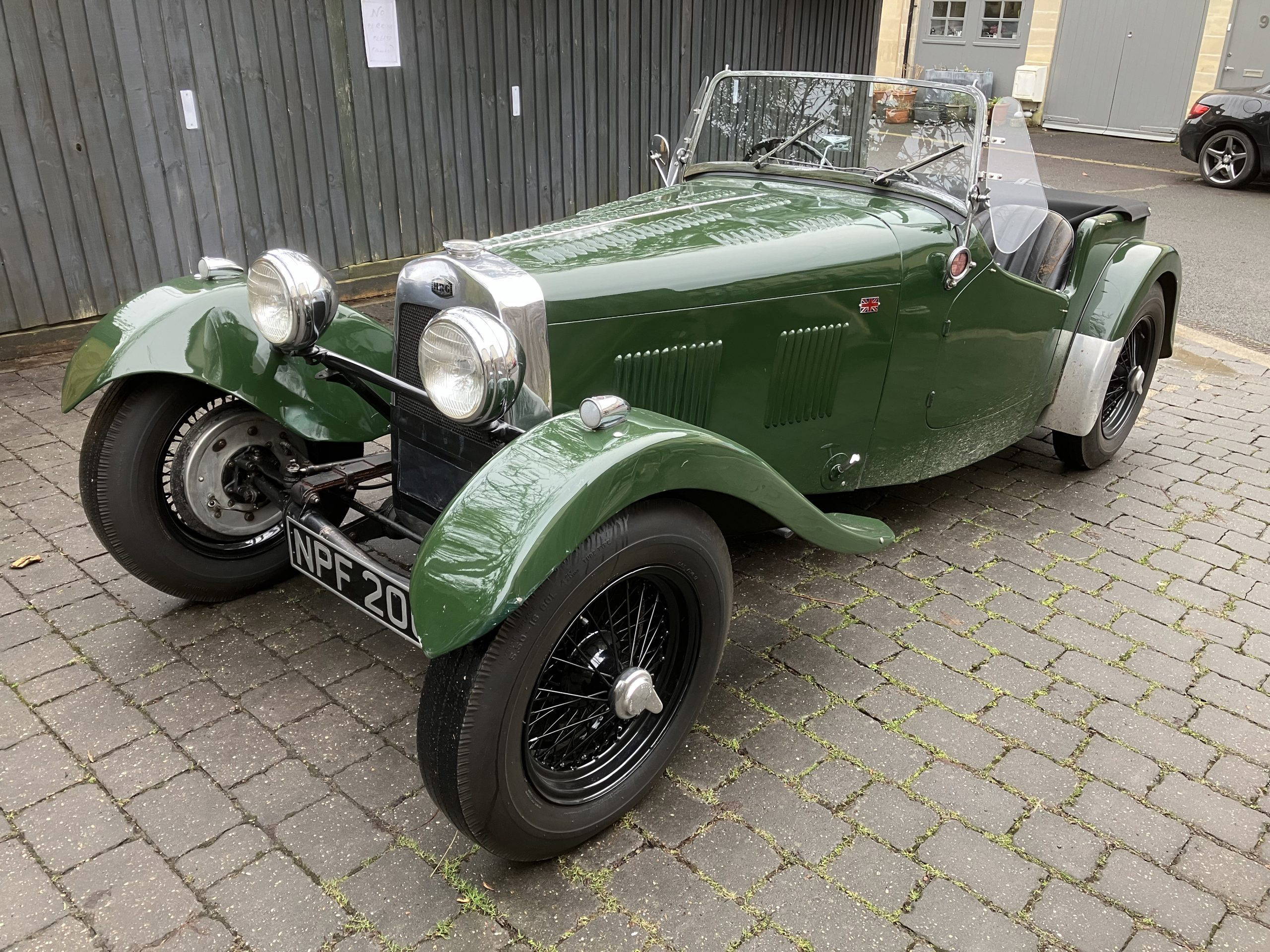
1949 – H.R.G “1500” – NPF 206
Built by the H.R.G Engineering Company Ltd in Tolworth. Completed and first registered in September 1949. 99 of this model type were built from 1939 to 1956.
Brief Specification:
H.R.G designed & manufactured lightweight steel framed chassis fitted with a 1496cc Singer (based) H.R.G modified OHC 4-cylinder engine and Singer (based) 4-speed gearbox. H.R.G designed and manufactured mechanically operated drum brakes. Ash body frame under aluminium skin and wings by Automarine Ltd. 10-gallon internal fuel tank. Overall “kerb” weight approximately 14.50 cwt or 730 kilos.
History of This Car:
Chassis no. W194 was H.R.G Engineering’s last “works” demonstrator and originally finished in metallic silver and known as “The Silver Demonstrator”. As well as a demonstrator, it was used as a test and development car.
Originally built with a long stroke 1500cc engine, it was later converted by the factory to carry the shorter stroke Singer SM 1500cc engine for evaluation in 1951. Subsequently, the last 12 H.R.G “1500s” were fitted with that engine type and it also formed the basis of the bottom end of the “twin OHC engine” developed and fitted into the Twin-Cam cars. Hydraulic brakes and an experimental “hard top” were also fitted at one time.
The acclaimed commentator, motoring writer and pre-war racing driver John Bolster tested NPF 206 for Autosport in September 1950 at Brands Hatch. He commented:
“… I found this a perfectly practical vehicle for both social and sporting occasions, in town and country. It is a very useful car for everyday motoring, and yet it is ready to acquit itself equally creditably in a spot of sprinting or circuit racing.”
Competition driver, journalist and secretary of the British Racing Driver’s Club, John Eason Gibson also tested W194 for Country Life magazine in 1951 concluding that:
“…. compared to the “humdrum” nature of some everyday cars, the H.R.G is a real sports car and can be recommended as an excellent rejuvenator.”
The car was eventually sold by H.R.G to the USA. Here, it was regularly in competition on the West Coast including the Pebble Beach Road Races in 1954 and 55.
The Singer SM based engine later expired and, by 1958, the car was fitted with a six-cylinder Studebaker engine. For cooling, extra louvres were added to the top of the bonnet.
In 1984, the car was partly restored and re-fitted with a correct H.R.G / Singer based long stroke engine as originally built.
After some years in the South of France, it was repatriated to the UK in 2014.